Marine Studies
Marine studies are the systematic attempt to understand what exists in the sea, how it functions, and how human activity changes it. This section explains the field as the Foundation approaches it.
Marine ecosystems
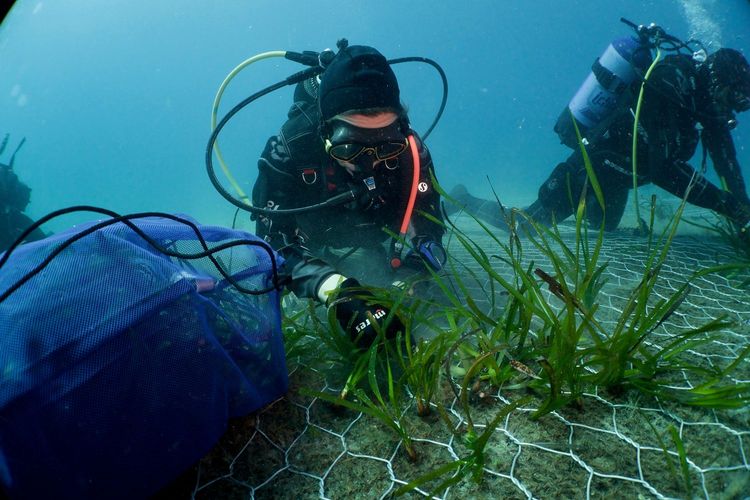
A marine ecosystem is the set of relationships between organisms and their physical surroundings — the seabed, the water column, light, temperature, nutrients and currents. Coastal ecosystems in the Mediterranean include rocky reefs, sandy and muddy bottoms, seagrass meadows and open water habitats, each supporting different communities of life.
Understanding a habitat means understanding its structure over time. A meadow or reef that appears stable may in fact be recovering, declining, or shifting in composition, and only repeated observation can distinguish between those states.
Biodiversity
Biodiversity describes the variety of life present in a place: the number of species, the genetic variation within them, and the range of habitats they occupy. In marine environments, diversity is closely tied to habitat structure — complex seabeds generally support more species than uniform ones.
Environmental change
Marine environments change through natural cycles and through human pressure. Documented pressures in the Mediterranean region include pollution, physical disturbance of the seabed, coastal development, intensive resource use and rising sea temperatures. Distinguishing these influences from one another requires consistent method and patience.
Human interaction with the sea
In the Maltese islands, as across the Mediterranean, the sea is a place of work, transport, food, recreation and identity. Marine study is therefore not separate from social questions: it informs how harbours, fisheries, tourism and coastal planning can operate with less long-term damage.
Knowledge-based environmental decisions
Decisions about the marine environment are often made under uncertainty. The purpose of marine study is to narrow that uncertainty: to establish what is present, to record change, and to make the basis of any conclusion visible so that others can examine it.
The Foundation does not publish research findings that it has not produced or properly referenced. Material prepared by the Foundation will appear under Research & Knowledge.